Apple Podcasts

 PocketCasts

 Spotify

 Overcast

 TuneIn

 RSS Feed

 YouTube

 Amazon Music
Rohail Khan on Closing C-Suite Deals and Beating the No Decision Trap
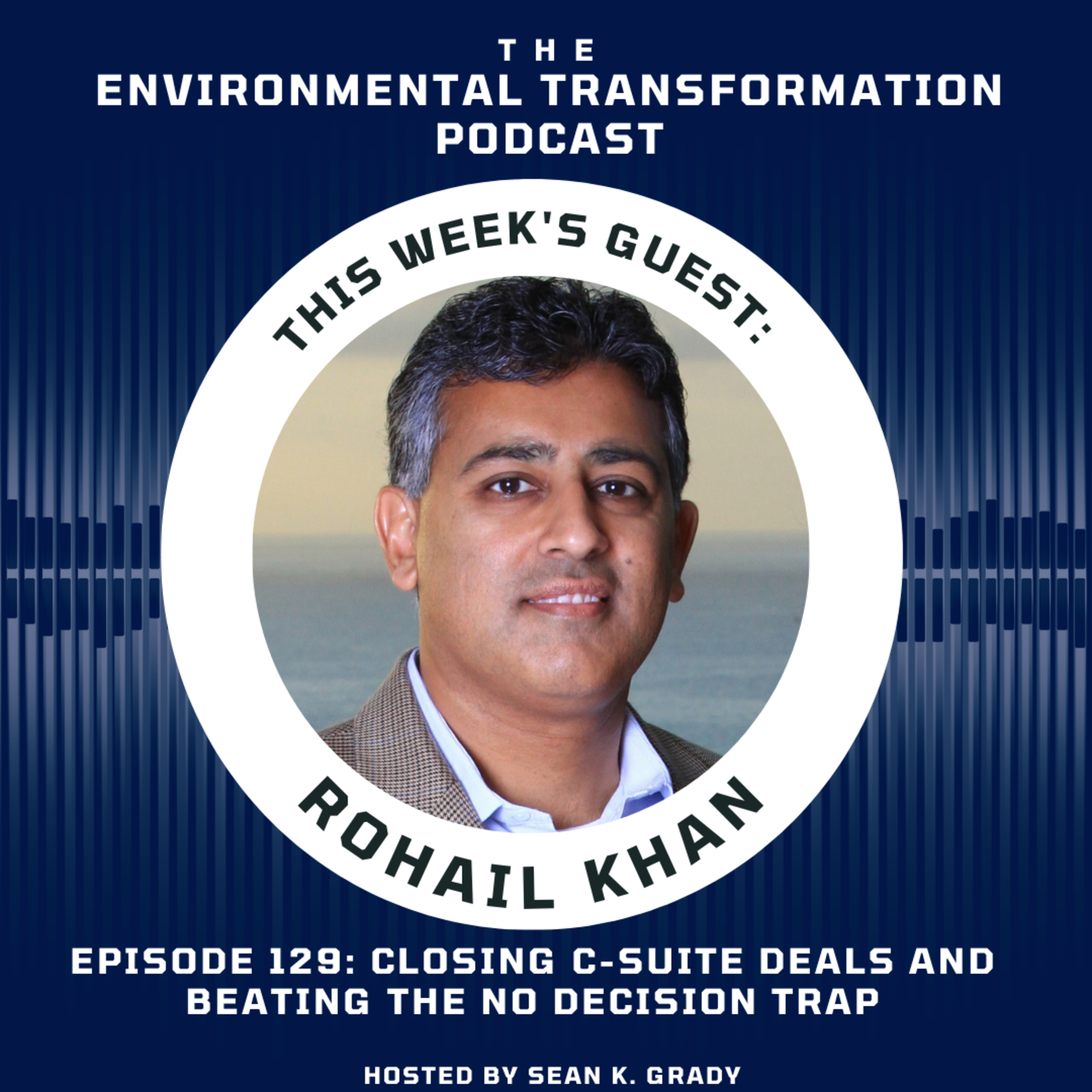
Forty percent of prospects never make a buying decision, and the reason is rarely the competition. Rohail Khan, founder of Avant.AI and executive consultant for Corporate Visions, breaks down why the status quo is the most dangerous competitor in any sales cycle and how to defeat it.
Khan draws on 25 years as a C-suite executive, including roles at Xerox and Bank of America, to explain what CEOs and CFOs actually pay attention to during a pitch and why most sales teams lose the room within the first five minutes. The conversation covers how to use earnings call transcripts to find unconsidered risks, how to escape the commodity trap by shifting from features to financial outcomes, and why "you phrasing" transfers ownership to the buyer in ways that change the entire power dynamic of a pitch.
Host Sean Grady also gets into Daniel Kahneman's prospect theory, the EBITDA pivot, the value wedge, and the three deadly sins of sales messaging. Khan offers specific AI prompt strategies using tools like Perplexity and Gemini to surface insights that clients do not yet know they need.
Whether you manage large accounts, prepare executive proposals, or are trying to break through to the C-suite for the first time, this conversation delivers a concrete framework for turning uncertainty into urgency.
Learn more about Corporate Visions at corporatevisions.com. Visit Sean Grady's website at seankgrady.com to sign up for the newsletter.
#SalesPodcast #CSuiteStrategy #EnvironmentalTransformation
TAGS:
Rohail Khan, Avant AI, Corporate Visions sales training, C-suite selling, executive sales strategy, no decision sales, EBITDA pivot, value wedge, prospect theory, Daniel Kahneman loss aversion, B2B sales podcast, sales training podcast, closing deals, unconsidered needs, sales messaging, commodity trap, Environmental Transformation Podcast
CHAPTERS:
0:00 Introduction and Rohail Khan's Background
2:55 The Elevator Pitch and C-Suite Preparation
8:00 Understanding the CEO, CFO, and COO Mindset
11:30 Using Earnings Calls for Sales Research
15:55 Sponsor Messages
16:40 Why No Decision Is the Biggest Competitor
19:45 Finding Unconsidered Needs With AI Research
25:30 Biggest Preparation Mistakes in Executive Pitches
29:30 You Phrasing and the Power Dynamic Shift
31:45 The EBITDA Pivot and Avoiding Speeds and Feeds
34:30 Breaking Through the Procurement Gatekeeper
38:30 The Value Wedge and Defensible Differentiation
41:00 Making the Customer the Hero Through Storytelling
43:00 Decision-Making Psychology and Managing Risk
47:30 Prospect Theory and the Cost of Inaction
52:30 Telling Details Versus Superlatives in a Pitch
53:45 Reframing Emotional Anchors With Analogies
55:30 The Three Deadly Sins of Sales Messaging
56:30 How to Connect With Corporate Visions
0:00 And I'll tell you in this environment, that status quo decision is one of the biggest mistakes an organization can make. As I've been kind of working with teams, the biggest challenge is that if there's no compelling reason aligned to the biggest risk, then the default, the kind of action is no action. I'd say over the last 25 years, this is the most complex environment any executive has had to manage. And so to try to apply yesterday's solution to today's problems, it's one of their biggest challenges. Now they end up at the no decision because they don't know what to do. Welcome to the Environmental Transformation Podcast, where we bring you interviews with industry leaders, climate champions, sustainability practitioners, EHS and hazmat professionals making an impact in their businesses today.
0:46 Each leader solving complex challenges and delivering solutions within their areas of expertise. I'm your host, Sean Grady, and thanks for joining us today. Before we jump in, make sure to follow us on your devices and visit my website at www.seankgrady.com and sign up for our newsletter and e-mail announcements. Now let's get started. Welcome to the Environmental Transformation Podcast. I'm your host Sean Grady and today's guest is Rohil Khan. Rohil is the CEO and President of Avant AI. He's scaling people intensive technology, enabling B to B services and their platforms through growth and discipline and discipline M&A efforts over 20 years, leading multibillion dollar HR, healthcare, banking and business process outsourcing services with the direct accountability for commercial strategy, sales execution and PNL management. He's built and scaled global shared services and AI automation capabilities to drive margin expansion, delivering 20 plus percent of compound annual growth rate and 2 1/2% plus times the EBITDA growth through operating discipline, technology enablement and acquisitions.
2:04 He's got a proven track record in the PE backed and sponsored and has sponsored owned environments, leading integration of 10 plus acquisitions and building high effective, low ego execution oriented leadership teams. Yeah, it's a little mouthful just trying to run through this here. But there's one last point I want to hit though, because this is how we connected. You're also an executive consultant for Corporate Visions and that's a leading provider in science based revenue growth services for sales, marketing and customer success teams and providing great training and and education for sales leaders across the country. So, Rohil, thank you for joining the show. No, it's my pleasure.
2:51 Well, you know, we had a great opportunity. I had the great opportunity of sitting into a sales class with you a couple about a month ago now. I guess it is. And I was fascinated by the training. It's probably the best training I personally have been through. And I just want to let our audience know, hey, if you're looking for great training, he's the guy. But here's here's some stuff that I wanted to get from out of Rohil in a conversation because I think everybody in this sales environment needs to hear these things and these tactics. So I wanted to start out if we could, Rohil, many people, it's kind of like they get their ideal opportunity, you know that in that elevator pitch.
3:32 So if you just give me a minute here to kind of frame this question, I think it was it'll may help us dive in. You're a sales professional, you're struggling to land that meeting with the CEO or sales executive, you know, or I mean AC suite executive. And let's imagine that you're managing a large account and you're on your way to the office to meet your sale, your procurement officer. And just by happenstance, you meet the CEO on the elevator. Now, most of us probably go, Oh my gosh, this is the CEO I've been trying to nail. So this is that a quit. This the quintessential elevator pitch.
4:13 We all kind of like dream about this opportunity, I think at times in our life. But how important is it for a salesperson? Always be prepared for this type of an encounter. You know, what should they be able to communicate to the CEO in that brief 2 or 3 minutes that they have with them and what should they walk away with from that encounter? And I think, you know, I want to hit this because we went through this exercise and trading it was pretty powerful. No, I think it's a it's a great situation and it's a situation that's totally unpredictable. You don't know when it's going to happen and in today's environment, it's the frequency of that happening is a lot less than historically it's been. So when the opportunities present themselves, you've got to take advantage.
4:55 So a couple of things that you got to be thinking about. First and foremost, you've got always got to understand what's happening at your client, not at the operating, what I would call the dual level, but also what's happening at the executive level, meaning if it's a public organization, why are they in the news, What's going on? What are their initiatives? What are the most important things that are happening that would be relevant to the CEO and the CFO? Because at the end of the day, your pitch has to resonate with the key decision makers of the organization. And that's really two people, the CEO and the CFO. So if I happen to be the CEO that you ran into, the things that I'd be looking for is your interaction has to be memorable. And why is that? Because I got too many things to focus on. So being memorable means align it to the biggest risk that I have, meaning you've got to highlight something that's knowledgeable and insightful and from your viewpoint, but it relates to the biggest risk that I'm trying to manage within the business.
5:51 That's number one. Number two, it's got to be a fact based measurable interaction, meaning it can't be a series of acronyms and motherhood and apple pie statements that don't mean anything and don't differentiate you. If you were going to be measurable, memorable, you have to be differentiated because I talk to hundreds of people a day if I'm the CEO and those conversations in one ear out the other, unless there's a reason for me to pay attention, risk is the one reason I'm going to pay attention because the risk is related to the organizational performance that I'm accountable for. So you've got to tie to a risk the most important one. You've got to talk about something that's provocative and insightful, that's usually with the complexities of the environment we're dealing with something like an external factor or some event that's that's going to impact, either accelerate the risk or impact performance.
6:43 And then the last thing that you want to be able to do is you've got to be able to engage me. It's no point just talking at me. You want to talk with me, which means there needs to be a conversation. The only way I'm going to start to talk is if it's something insightful and interesting that causes me to lean in. So that's that's a tall order in a minute and 1/2 or two minutes. But your preparation is going to be the key that allows you to actually hit that and hit that out of the park. And then ultimately the follow on is whenever you have a kind of a transitory meeting like this, you're angling for a follow up meeting, you're angling for something else. So at the end, you what you want to close with is that's fantastic. I'd love to grab 15 minutes. I'll work with your EA or however you want to do it, but you want to make sure that there is a compelling reason for me to give you the most precious thing I have, which is additional time. Right now that that's really good. I mean, you know, it's being provocative and memorable. You know, is, is, is probably a challenge for some people, you know, and I think, you know, coming up with some interesting fact that is going to shock him a little bit or go, oh, wow. And I think being prepared always on the ready, I guess is, you know, if you know your account and you know that business really well, you should be able to adequately do or, you know, deliver a quick elevator pitch with any of the the various C-Suite people you're looking for. But I do think that there is some challenges and, and I think as salespeople, we kind of get
8:14 into this mindset of we're understanding what we do, but we don't really try to think about, well, what do they do? What's their responsibilities? And so it's, and I want to talk about it's all about them mindset, right? So talk about the mindset of ACEO, you know, and what their jobs descriptions are, the CEO, the CFO and the CEO. Because a lot of times when you encounter that person, I don't think we're thinking about, well, what are their responsibilities and how do I need to retrain or reframe my messaging to meet their? Level yeah, no, it's a it's a, it's a great point and I think you're absolutely right. And you know, I've been AC level exec for 25 years and I even trained my own teams, but I've also been approached by many other organizational sales leaders.
8:57 And it's shocking how frequently they talk about themselves or they talk about their own organization. And I'll tell you, it's one of the biggest pitfalls of interacting with AC level executive is, with all due respect to the great things you as a sales leader might represent for your organization, I don't care about those things. What I care about is what your great capabilities can do to accelerate my business performance and mitigate my execution risk. Those are the only reasons I actually pay attention because that's the mandate I have to represent for the organization. If I'm in ACEO or CFO or COO role, my goal is to operate in a way that drives business performance. So what I'm looking for are individuals that can either help accelerate that performance or mitigate the risk associated with that performance.
9:44 And so the challenge is a lot of times people focus, so they're so excited about here, here's the great things we're doing, here's the great products we have. All of that unfortunately doesn't resonate with competent Cxos. What it does is it gets you delegated down into the organization at the dual level. So when you're talking to that executive exactly as you said, you have to understand what drives their performance, what are the initiatives or the the strategic pillars that they are focused on, what's driving their day-to-day interaction and ultimately what drives and gets their mindshare. If you're not connecting to that, then you're not connecting, period, because that's go ahead.
10:27 Yes what's a good way for a person to find out that information like what makes them tick, what's driving their decision is and what's important to them, You know, you know, knowing the difference between the type that the roles of these C-Suite executives with CEO they're I think you know, they're mostly focused on strategy. How do we grow and maintain our business, the CF OS, how much money are we making and how can we continue to operate at a high level, you know, a profit? And then the, the CEO is like, how can we just keep the wheels running on this thing, right? And and, you know, successfully deliver, You know, I think that mindset is important, but how do we find that information out if we're trying to figure this out? No, that's a great question.
11:10 There's a lot of ways to do it. Think let's say your client is a publicly listed organization. The 1st place I would go is I would go to their earnings calls. I would look and track their earning transcripts because if you listen to the earnings calls, it's good information, but you miss too much information. I've always coached my team. They look get a copy of the transcript of the earnings call and they're sites like Motley Fool and Seeking Alpha that easily get you access or the investor relations sites of the actual client. They'll give you the podcast, they'll give you the transcript, they'll give you the presentation. Those are three critical things to take a look at because organizations that are public, on every earnings call, the CEO talks about strategy, he talks or she talks about the key initiatives that they're focused on.
11:51 They'll literally tell you what that is. Following that conversation, it's ACFO. They talk about financial results, they talk about critical KP is they're achieving, and then they talk about the risks. So if you're paying attention just to those three kind of areas of focus, the podcast, the presentation material and the transcript of the call, you've got a big leapfrog jump into actually understanding what they care about, what their priorities are and what risks they're trying to manage. Because literally they'll tell you what they are. And in addition, in addition to that, what is very powerful with the transcript of the call is there is a, there's AQ and a section for all of the analysts that are actually asking questions once the call results are shared. And that is fantastic information for you as a seller to understand what are the key areas that even the analysts are starting to find either are working or not working. And now how did those problems or opportunities relate to your ability to accelerate those opportunities and mitigate those problems which ultimately are risk related? Yeah, no, that's, that's good.
12:50 So there's good information to be obtained through these these sources of, you know, of information that's out there through the earnings calls and whatnot. And I think that's a great place to find them. And so it does take a little preparation to figure that out. Do the research, be prepared. Hello ET Nation, I want to thank you for listening to the podcast. If you're enjoying the interviews we bring you, consider supporting the program by visiting my website at seankgrady.com and buy me a cup of coffee. Proceeds will go towards helping me continue producing timely content and offset production costs. I'd also like to take a moment and recognize a few of our sponsors of the show who have been amazing partners and our ET Nation legends. If you're looking for a drilling an environmental contracting firm to help you delineate the extent of contamination at your site, then look no further than Cascade Environmental. Cascade has over 37 offices across the country and offers a huge range of environmental and geotechnical drilling, site characterization and remediation services. With their huge fleet of equipment nationwide coverage, Cascade is a great choice to support your environmental and infrastructure needs.
14:03 To learn more, check out their website at cascade-env.com. That's cascade-env.com. Hey, are you looking for an equipment rental company to help you with your next wastewater, water remediation or waste management project? E Tank is the only environmental equipment rental company in the industry that offers 100% guaranteed certified clean temporary liquid storage tanks at no additional cost. This protocol gives Peace of Mind for the previous customer by limiting their downstream liability as well as the future customer by preventing any cross contamination for all of their rental tanks. E Tank also runs a one-of-a-kind complete maintenance program for all rental items including liquid tight roll off containers, fluid transfer pumps and filtration items. The next time you are presented with an environmental challenge, call E Tank to come up with the solution for your problem. I want to thank one of our sponsors, Waste Link. Waste Link is the all in one software platform transforming how environmental professionals manage waste, connecting generators, service providers and. Disposal facilities in a way that is simple connected. And transparent.
15:19 Their platform helps streamline everything from waste profiling and routing to inventory management and billing, giving you the tools you need to operate more efficiently and reduce cost. Whether you're a generator looking for better options or a service provider seeking greater efficiency, Waste Link has you covered. If you're ready to take control of your waste management processes and optimize your business, visit wastelink.com to schedule a demo today. But you know what? When we get into trying to figure out how do we actually make these companies consider, you know, the services we want to offer them if we're a salesperson, right?
16:00 So let's talk a little bit about this concept of the no decision obstacle because I think we all find this in our daily kind of sales and jobs and environment as we try to engage customers. You know what the research indicates that 40% of prospects ultimately stick with the status quo instead of making a buying decision. And then from your perspective, why is no decision often a bigger competitor than the other vendors in the market? It's, it's a great question. I would tell you that one of the real reasons that the no decision shows up so frequently is the pitch that's made by the sales executive doesn't resonate, isn't compelling enough, doesn't highlight areas of risk or opportunity materially enough to make a difference around performance.
16:51 So if I'm an executive and I look at what's actually happening and somebody pitches something to me, but there's no compelling urgency, there's no compelling risk, then my choice is either I can keep doing what I'm doing and I don't have to do anything differently, or I'm going to take a chance. But there's no real quantification of what the, the, the real value is or the real outcomes are that that I'm going to take advantage of or I'm going to need. And I'll tell you in this environment that status quo decision is one of the biggest mistakes an organization can make. As I've been kind of working with teams, the biggest challenge is that if there's no compelling reason aligned to the biggest risk, then the default, the kind of action is no action. But as I said, this is an environment over the, I'd say over the last 25 years, this is the most complex environment any executive had to manage in.
17:43 So to try to apply yesterday's solution to today's problems is one of their biggest challenges. Now they end up at the no decision because they don't know what to do. So if I don't know what to do, I'll keep doing what I'm doing. That's the opportunity for the sales leader. Yeah, right. I mean, I think in this day and age with technology and how fast things are moving in this space, you know, AI is, is affecting how businesses respond or actually just work and function as a company. It's got to be difficult to make some bigger decisions, especially around making systematic changes. I mean, you know that I think the big challenge a lot of companies will face is the quote UN quote management of change.
18:28 You know, the fear of management of change is what I really want to say, which is probably why the obstacle of no decision is is use theirs because as they got the fear of management of change and they don't want to do it. Yeah, they don't. And I'll tell you, you know, and that's where the sales opportunity becomes so materially differentiated potentially if you as an organization or as a sales leader have done the research, if you understand what the biggest challenges they are, if you've done research on their key competitors, because that's a great course of insight. All of a sudden now you're pulling together a viewpoint that's anchored in data that relates to work that you as an organization has already done for organizations like your target client.
19:09 Now you're starting to set the pathway for them to take action. As we said, the no decision is because I don't know what action to go. Maybe I want to make a decision, I just don't know what to do. And if no one helps guide me through that conversation, then I'm stuck not really knowing because you can't ask a client, especially the executive, to take a chance on something they've never seen or done. They're not going to take that chance because that's going to affect their career and potentially their job. What they want is the ability to hitch their wagon, as it were, to an organization that's been there, done it, navigated it, solved it, and that's where the trust comes. So if I'm going to take a leap, I wanna leap where a place where I can get a soft landing, and that soft landing is the organization that's competent, that's done it before, that understands the problems and the risks and knows how to navigate them. That's great insight there.
19:55 That's really good. A lot of times sales reps, we get caught in the commodity trap. Let's talk through this a little bit because I think a lot of people won't realize they get suckered into putting being put into that position without realizing they're in there. You know, many sales teams focus on the identity, on identifying their needs and, and the prospects already know what you know, what they have as far as these needs. But that leads to this commoditization conversation. And how can a seller break the cycle of finding? I'm sorry, the cycle to find an unconsidered needs versus you know what they already know they have through this process of kind of educating the buyer. What did you think of this?
20:40 Because this is how our capabilities can come into play and help. Yeah, no, it's a great question. I I would say one of the best things to understand when trying to figure out where is the gap or the flaw that your client isn't taking advantage of. It's taking a look at what are the, you know, there there in today's environment. When you think about AI, you think about global supply chain challenges, tariffs and trade, geopolitics in terms of, you know, conflicts that are happening, global warming, demographic changes. And I could rattle off another 10 to 12 factors that are impacting organizations at the global level. You want to be able to understand what's the most important factor that's now impacting the target executive you're focused on what's impacting the role or the initiative that they're actually accountable for. All of a sudden that becomes the way to get their attention. Now, once you get their attention, you've got to continue to tell the story.
21:36 And that means here's the the way I can de risk that issue in terms of that initiative that you're focused on here. Based on that de risking, here's how I can actually help you achieve what your CFO or CEO are talking about in terms of top line growth, global expansion. What are those major initiatives are at the top of the house that drive the strategy of the organization? If you don't do that and it's not interesting, it's not relevant, what happens is you get delegated down to the doer level of the organization. Once you're at the doer level of the organization, like procurement as an example, they'll say, look, that's real great. That's right. How about the best price? Yeah, you. Give me the best price because everything else is above my pay grade. I'm I'm incentive to squeeze you to get whatever price I can. So my preach is going to be, hey, we like your stuff. But five other people said they can do this. What are you going to do to cut your price? And all of a sudden you're in this commodity dust spiral because you're being commoditized and kind of pushed to to match pricing because nobody understands the innate value that the old capabilities can drive for the organization, which in almost all instances far exceeds whatever savings they're going to try to squeeze out of you. And I think that's the the challenge is, is changing the the conversation around price to value, right like, and So what are some specific like research tactics Rep can take that, you know, to find the problem that the CXO just hasn't they don't even know they have.
23:01 So first and foremost, it's understanding the nature of your organization as a sales leader and what are all of the problems? What are all the challenges you guys are solving? Overall, a client is usually focused on a singular or a binary set of issues because they're limited to their industry, they're limited to to a certain certain vertical. They've got limited kind of purview in terms of the things that they're focused on. So they don't get to, they know what they know. The problem is they don't know what they don't know. Now as a sales leader, most organizations aren't single threaded in, in a single geography or a single category or single vertical. So all of a sudden you have experiences across different clients and different issues with different problem sets with different industry verticals, etcetera. And you get to see what I would call a, a kind of a plethora of issues that you as an organization are solving. So all of a sudden now that's number one, which you have insight and variations of problems that you're solving as an organization that a singular client will never see or will never operate on.
23:59 So there's some insight that's there. The second thing I would suggest is the ability to do some research and leveraging your AI tool of choice, a perplexity, a Gemini, a gunk, whatever it is that you use to start to assess a detailed set of prompts that start to triangulate to those sets of problems. So what I'm talking about would be things like, you know, an example of a prompt that I've used in the past with my teams is I assume a third party persona of a strategic partner, like a McKinsey partner as an example. So in the in the prompt, it says you will act like a senior McKinsey partner in automotive and you're you've been hired by Ford to figure out how the organization that the sales leader belongs to can help them accelerate their core strategies and mitigate their market risks.
24:53 And then a series of kind of drill downs that relate to the research you've done that says, look, I listened to the earnings call, here were the three strategies here are their biggest risks that they talk about. So that research now informs the nature of the prompt that you're going to use as you start to do that further research. And what you're doing is you're assessing public data, competitive data, looking at market performance. It allows you to synthesize information at a level and at a depth. It takes way too long and most people don't have the capability to do well. AI has helped change the game for that. As long as you focus in on being thoughtful and detailed with respect to your prompts, it can generate a lot of good insight. And that insight now combines with what you know about the client and that target persona, and it becomes a way for you to start to really dig into those insights overall.
25:41 Yeah, it arms you with the right information to make that compelling conversation real, right? I mean, that's great. Well, let's let's dive into a little bit of this concept of, you know, the preparation and the strategy of things. And I think one of the one of the questions I would have for you is, you know, from an executive lens, Rohail, having served as an executive at Xerox and Bank of America, you've seen the high stakes pitches from buyers. For the buyer side, what's the single biggest preparation mistake you see sales teams make when they finally get that meeting with the C-Suite? The biggest mistake they make is they talk about themselves. They talk about their product, they talk about their capability, and they're totally ignoring the reasons why they're in the room. The reason you're in the room is to engage the executive. What does every C level executive care about? They care about organizational performance, which is accelerating the performance goals they have and mitigating performance risk.
26:41 Why do they care about that? Because if the organization performs, they get paid. It's as simple as that. So if you show up in the room and it takes you 25 minutes to start talking about the ways you can help me de risk performance, trust me, you've lost me at minute 5 because I'm not paying attention. I, I can tell you over the 25 years that I've been AC level exec, I see pitch after pitch after pitch and I'm shocked at how infrequently the organizational leader who's making the pitch focuses on the client first. They focus on themselves. They're great product, their footprint, their number of people, their, their IP, etcetera, etcetera.
27:23 Honestly, I don't care about your stuff. I care what your stuff can do for me in terms of accelerating performance and mitigating performance risk. So it sounds like, yeah, that that's, that's focus, not focusing on them and, and basically not even addressing, you know, the, the, the big issues that they are really concerned about. I mean, waiting 25 minutes into a presentation to finally get to what's important to them. That seems to be a long time like you mentioned. And, and you know, there's this, there's some stats on this where they'll pay attention, people will pay attention like in the first couple minutes of a presentation and they'll remember about 100% of that. And they miss about the vast majority of conversation until the very end, right?
28:07 And then they'll remember that part. But that's, that's a little bit of this, the concept of that, the hammock storytelling, you know, process you described in, in your presentations during the sales training. But, and it does resonate with you because you want to have a really good, compelling conversation and, and why the company should consider you and you understand their business, the whole explanation of how you're going to do that. That's kind of when they go, oh, I don't know, this sounds great. And then at the end, you better hit them with, here's the most important part. And, and I think you need to, we need to be able to phrase and prepare our presentations that way. It is. I'll tell you the you said something is really important, right? The inability to align to the priorities that an organization has is one of the biggest sources of failure. It's not hard to find that information. Literally a minute of Googling and a minute of research will give you that information.
29:01 So there's no excuse for situations that where I'm sitting across the table from a sales leader and they say, hey, we'd love to help you out. What are your biggest problems? What are your strategies? What are your priorities? Don't go in there with that question because it's like you already know that information. I mean, that's a train wreck set of questions because what that tells me as a sales leader, as as an executive is you're totally unprepared and you want me to do your job. Yeah, OK, that's good. All right, well, here's here's another one here, here's another great. I think the you phrasing as a weapon. This one I really when I, you know, start thinking about it, it is something that I think really transforms a conversation. So you advocate for you phrasing to transfer ownership to the buyer. How does changing we can help you to what you'll be able to do fundamentally change the power dynamic at the at the C-Suite pitch well it.
29:56 Oh, important one, it's a, it's a slight nuance, but it's an important distinction because what it does is it starts to paint the picture of how the organizational performance can benefit, be benefited or accelerated or the risk mitigated in an environment where I now I'm starting to visualize what is it going to look like? How's it going to feel for my best customers or my constituents or whoever the stakeholders are that I serve as an industry? Because now I'm starting to visualize what that looks like and what that performance is going to be and the contrast between what it's going to be versus what it is. That's the thing that starts to gain energy and starts to gain alignment. It's, Oh my God, look at the challenges we're dealing with now. But it can be like this, which is exactly what we're trying to achieve or exactly what we use as a leadership team we're trying to drive overall.
30:45 So that that slight change in framing allows me to start the channel and visualize what it is that's going to happen versus the same old me we pitch that everybody else is going to have when they follow in, you know, 3 sales leaders will follow. You are going to say, effectively, we're trying to say a lot of the same thing. Yeah, by by using this application or this product, you will be able to da, da, da, da, you can take advantage of, you know, the efficiency da, da, da, right. I mean, that's kind of the put them in the driver's seat concept. I really like that and changing those words just I think they do psychologically make a big difference. They do because what it does is it puts them back in the position of being able to drive the execution focus in a way that today they won't be able to.
31:33 Right, right, right. OK. Here's another pivot I think that salespeople may not get or recognize on time and it's too late. The EBITDA pivot. What Most reps talk about efficiency and productivity, but when should a sale, a seller stop talking about technical features and pivot to the conversation towards EBITDA? You know cash flow, You know the market expansion. Well, I'll tell you, they should always be focused on that because when you start talking feature, I call it speeds and feeds. When you talk speeds and feeds, you're focusing down into the organization. You're focusing at the door level because the executives aren't the ones using the dashboards or the Mac or the products or the services.
32:17 So when you talk speeds and feeds, you automatically are under leveling at the, at the level of the CXO. So they're going to push you down and you get stuck. So when talking to a CXO, never lead with the how because that's speeds and feeds. What you want to focus on are the biggest risk. They have the biggest initiatives that they're focused on. That's the what and the why of the conversation. If you, if you engage me in the what and the why, then you get directed down to my team that I'm going to send you to. But all of a sudden I as the executive, I have contacts and I understand what the biggest risks are and I'll stay connected to that directive that I've given you within the organization that I have. It's always best to go with the C level executive and get directed down to the doors.
33:02 Then start at the doer level and try to work your way up, because that's a That's a futile effort. Yeah, because like the lower level management teams, they just don't have the stroke to get that service or that decision to the higher level CEO. They don't Now a lot of them think that they have a lot more influence than they have. I'll tell you and for your listeners, I'm sure everybody can think about situations where they're they're talking to the doers in the organization. All of a sudden the doer says, Oh my God, and some dumb decision happened. We have no idea why the the executives made that call. They changed this vendor. They made this strategy because they're not purview to what the business performance execution challenges are and need to be there at the doer level.
33:45 They're just, they're executing and, and, and executors or doers, they're insulated from a lot of that risk the organization has in a lot of instances. And so that you're just when you're talking, as I've shared with my teams over the years, when you talk speeds and feeds and you expect major decisions to be made, you're talking to the right level and you're usually talking to the right, wrong person. Yeah, exactly. I mean, I think a lot of times sales people, they get stuck in, you know, the arbitrary glass ceiling, so to speak. You know, they've got a great relationship with the procurement manager or the, you know, some of the OPS managers or local presidents or whatever. But they can never break into that next level. And for a lot of reasons, they're, they're, they're sometimes they're kind of blocked, right? I mean, they are not going to get it because they those people don't want you to have access to the CEO or the CFO. What would you say or how would you break that cycle or that you know that dynamic so you can actually get in front of the CEO and CFO?
34:56 What tactics would you recommend for that? Yeah, Firstly, I think it's important for everybody to recognize and I've shared this with my team for decades. I said never be confused that you're pitching to the person across the table from you, because you're not. You're building a story for two people in the organization, the CEO and the CFO. So what that means is you're always kind of levelling up the conversation. So if I'm talking to the head of procurement, procurement doesn't own performance, They don't own revenue, they don't own retention, they don't own engagement, they don't own any metric of performance that's talked about on an earnings call. But let's say you've got a great relationship with the chief procurement officer. What you want to do is Telegraph a conversation that's going to be relevant to the CEO and the CFO.
35:37 Then all of a sudden, now the chief procurement officer can be the hero or the hero and of the story with to help the organization perform. Now, if you're lucky enough to have a chief procurement officer who has some decent business chops, then you can guide them through the conversation you need to have. But you're, you're kind of always telegraphing up and telegraphing that messaging up to the CEO and the CFO. So now it's a capable procurement officer is available to you. He or she can then be the conduit through which that story is told. But it's your story as an organization, you're enabling them to get great visibility. The problem is, yeah, the problem is those types of people, unfortunately are few and far between.
36:18 So they're going to, as you said, appropriately, they're going to either purposefully or just innately block your access because they don't realize they're doing it because they're either insecure or they want to make sure they're the gatekeeper that all of the knowledge flows through. So what you've got to do then is leverage your executive team to do some kind of a top to top kind of conversation where you protect the relationship you have with that executive that you're dealing with and you have your executives come across the top. But I like what you mentioned there about, you know, always projecting up that vision or that strategy in your presentation. And I think it, you know, where it really comes to play in is maybe you're putting together a large proposal, multi $1,000,000, you know, proposal for a large, you know, RFP And you know, the proposals come comes to you and, and they're do they want price, they want your level of service, they want the typical capabilities that you can, you can offer.
37:15 But in that, you know, I think those proposals, that's where I think what you're suggesting is start to communicate in there what is important to the CEO, what is important to the CFO. Because if you do that, then at some point when those proposals are going to be reviewed and they all will at some point at certain levels of sign off, right, then, you know, the CEO or CFO will eventually probably actually look at a proposal that comes through that's that level in that size because they're so expensive. That's a big deal. It's a big decision. And the procurement officer won't have a lot of ability to control the narrative enough because someone's going to have to read it, you know, above him.
37:59 I think that's important conversation to think about when you're doing these proposals because that would be a great way to, if you're not, if you're struggling to get to the CEO, you can get through possibly through that process. Yeah, no, you can. There's no question about it. You always have to challenge your own thinking as a sales leader to say and, and, and there's a simple litmus test question I've shared with my teams over the years. I said, and it's, it's 5 seconds of reflection that saves months and months of heartache. And it's as simple as this. Before you pitch, before you send an e-mail, before you sit in a finalist conversation, play through the the, the talk track you're about to share or the e-mail which you're about to share and ask yourself a very simple question.
38:42 And that's as follows. Can my competitor say the same thing? If the competitor can say the same thing, you're nowhere near as differentiated as you think you are. And it's, it's going to come across like everybody else that says everything that's that you want to say or is already saying what you're said. So you're not differentiated at all. And if you're not differentiated, you're not memorable. If you're not memorable, you're not going to win. Yeah, no, that's a great point. That's a real good point. Well, when you're trying to close business and you know, you're trying to, you're trying to figure out where the value gap is with your differentiation, you know, in the market. Let's talk about this a little bit, if we could. The value gap or the value wedge?
39:23 Corporate Visions defines the value edge as the intersection of customer needs and your unique defensible differentiation. How do reps typically fail when trying to identify their power position in that wedge? The the biggest reason they fail is again, they make it about their own stuff. They make it about the speeds and feeds conversation because, you know, let's say you're talking AI tools. Well, is it Chachi BT? Is it open AI? Is it Gemini? Is it perplexity? All of these tools have a lot of similar capabilities. There's differences in nuances, models, but the uninformed buyer doesn't know the technical differences that exist. That's not something that they'll be able to speak to. But what they need to be able to do in terms of the value edge is understand that value edge is a lens that's squarely on your client, executive and their organization, not on you. The mistake people make is, well, my value is based on our capability.
40:22 It's not. It's based on what your capabilities can do to accelerate the performance of your client and mitigate those critical risks that they're trying to navigate, those that they see or don't even see. That's the way you articulate value. It's not about you or your product. It's about performance and it's about accelerating or mitigating the risks or the opportunities if it's good or bad that you have the ability to impact. That's powerful, that's really good. That's a good thought process. I mean, I mean, that's, that's gold right there. You know, when you're trying to close these value or the value gap and you're presenting your differentiators, some of the ways you do that is through storytelling and talk about, you know, making the customer the hero in the journey while you act as the mentor. You know, in the practical sense of how does you phrasing bridge the emotional gap between a dry business case and a compelling vision?
41:22 When you make it about you, what you're doing is you're making it personal. You're making it about the things that that executive owns, the initiatives that they're accountable for, the performance that they're going to be measured on. That's what gets their attention. Otherwise, if it's not about me and my performance or the organizational performance that I lead, then it's easy for me to disconnect and it's easy for things to sound like they're not very important because then it's a priority prioritization discussion for me, right? I know as an executive the things that are going to move the organizational performance because I also know the things that move my comp, right? There's a very Direct Line between organizational performance and executive compensation. And shockingly, executives behave like they're compensated to behave.
42:05 No big surprise there. Just like everybody, you know that that that watches these sessions, they're all sales leaders that know exactly how they're comped. And that behavior is going to be determined by that comp structure. And so that value wedge and that you framing has to be aligned to the things that drive value for the organization, which by default enables that C level executive to gain the compensation that they're owed. Yeah, no, that that's really good. So weaving in some some stories about, you know, how they're going to be able to be the hero by solving these problems are are really good. That's really good to put them in that position when they're listening to how this is going to help them achieve their goals.
42:48 Not your goals, their goals, right? It's always about them, not about us, right? We got to remember that the decision making process is quite complex when you think about it. There's lots of elements of the decision making process. And I think what's interesting about this is, you know, there's, there's, there's emotion involved, there's a logic involved, There's all kinds of things about maybe if you could talk a little bit about what sellers need to understand and what tactics can they use to close a deal through understanding these elements of decision making. I'll tell you at the executive level, the most important thing, and it's a simple thing, but it's a thing that's ignored almost all the time, unfortunately, is you have to anchor on the biggest risk that is going to impact the performance of that executive in the context of the organizational accountabilities that they have. It's the most important thing because risk is the only thing that gets elevated up in terms of importance. Everything else will get delegated and pushed out. You know, if there's and, and that risk is the most important thing because the risk is the one thing that can derail an earnings call.
43:59 It can derail performance of an organization, it can derail a career. If I'm an executive and it took me 25 years to get to that role, my goal is to stay in that role. And what that means is I got to manage all of the risks that I see and those that I don't see. So I got to depend on strategic partners to help me see the unseen. So understanding those risks are key in this process, but when you're, you know, kind of when you're presenting what you can do to help them manage those risk, you're really hitting on like their emotions, like, you know, because it's a decision they got to deal with. You also, you know, you want to like, I guess contrast the, you know, the positive, negative things or show some visuals that to make them think like, because there's a journey they have to go through to make a ultimate decision. This isn't just like, OK, yeah, I'd like your product. I'm done.
44:49 No, you there's a little more process involved to to make somebody really feel like, OK, they want to make that decision. And I think there's a lot of elements in that showing them the path to to success is how to do it right. There's no question about it. And you touched on something that's important. It's the contrast between the environment that they're currently operating in and the environment they aspire to be in some point in the future. That sales leader has to be helping them understand that the challenges of today are so egregiously difficult and you can't stand still because the Mack truck is coming. And if you're standing still, it's going to be, it's not going to be pretty. So what you've got to do is you've got to demonstrate some motion.
45:32 Most clients don't know what that motion is or needs to be because maybe they've never done it before. And that's where your sales pitch and it goes to your point around the visual. It's describing whether it's a story or a visual. Here's what it looks like today for your, your consider let's say you're, let's say you're talking to a hospital and you're talking about new technology that's going to drive better patient engagement and patient care. You don't want to talk about, hey, we got a cool portal and we got these cool little chat bots. No, you want to talk Here's what your patient deals with today. They'd spend 5 months trying to get an appointment. Then you come into the doctor's office and they got 900 pages that they got to fill out on a, on a, you know, flip chart somewhere and. And then they get passed on to their friend and their friend and their other doctor friend before they finally get to the person's going to help them.
46:19 There you go. And then so that's that's the current environment, the status of our current. Health care system, right? There, well, there you go. And and that's any executive understands because they've all been patients, they can identify with that situational context. And then you paint the picture of in the new world or post this effort, here's what patient engagement is going to be. It's going to be an automatic outreach to them. Appointments already going to be set. We know they like coming in on a Saturday morning or a Friday afternoon. That's the intelligence of the system that now is going to preemptively engage that patient, route them directly to that physician or a clinical care office that is going to be aligned to their knee.
46:59 But it's at contrast in what happens that becomes memorable because they got to go back to the example of your chief procurement officer. He doesn't know anything about patient care. That's not his job, but he can easily tell that story. You can easily you connect with executives they here's how different that's going to be. Yeah, and you've emotionally connected with them at that point too, in that scenario. That's really good. You know, another another way that you described the buying of a of a product and services and reason why you're helping them kind of address a risk or and mitigate something. There's this concept of leveraging the prospect theory and, and it's this Nobel Prize winner, Daniel Common conman.
47:40 He found that people value avoiding a loss twice as much as an equivalent gain. And how should a seller articulate the cost of inaction and tap into the psychology without surrounding, you know, sounding overly negative if presenting inaction is, you know, not the best? And that's why you want to make this decision. Yeah, it's a great point. And Daniel Kahneman viewed this. In fact, he was a sociologist that won the Nobel Prize in economics. But because of that decision theory focus and there's research was very much focused on a simple truth. They said, look, risk is immediate, so you get compelling interaction immediately.
48:22 An opportunity or a future event is at some point into the future. It may never happen. If it happens, it could be protracted. So the sense of loss is associated with risk, which is immediate. The opportunity of a gain is some point into the future. If I'm an executive, I'm I may not be around to get that gain 3 years from now, or two years from now, or even 6 months from now if I don't manage the risks that are immediate. So what would that? Look like. What would that look? Like Rohil, when you when you if you're going to present that, it's kind of a scenario. Do you have an example of what that could sound like to? You know customer. So I'll, I'll tell you. So you know, I, I do a lot of work in banking. So let's look at a situation with, you know, wealth management.
49:07 So today, if you look at the data just in the US, the baby boomer segment of the US is has somewhere between 80 to $83 trillion of wealth contained within that that demographic group. That's a ton of money and that concentration of wealth will never happen again in multiple lifetimes. So if I'm leading wealth management for, let's say, a large bank or wealth management firm, I need to understand how much of that money is moving every year. According to the research, Baby boomers are going to have about 20, call it 20 to 22 years to manage the transition of that wealth. And that happens when they retire, when they unfortunately pass on the fact of life. Well, then their assets get transitioned to their beneficiaries.
49:51 Yeah. If I'm in wealth Management Today, if I'm a managing director of an organization's wealth management firm and I have no idea who the, let's say, Sean, I don't know who your kids are and you're a high net worth individual. Well, how do I actually engage you then? How do I know you should be somebody I'm engaging? Because I don't even know that you've got X amount of money and it's going to transition to your, your, you know, dependence. And So what do I do? I wait for you to, to, to transition the money and then it goes to your sons and daughters. And all of a sudden I'll be lucky if they come to me because it's all chance unless I change that and say, look, I know that's the dynamic of what's happening in wealth management.
50:32 So what am I doing to gain intelligence around my current customer base? The customer segments I want to go after, Like I live in Chicagoland. Winnetka is one of the the most affluent suburbs in the US, in fact, in Illinois as well. So if I have 5 clients in Winnetka, which is the North Shore of Chicago bordering Lake Lake, MI, and I know they have this kind of a profile. I want to do a quick pull of everybody else in the zip code who has a similar demographic profile. And then I want to do some targeted outreach and say, look, we're helping organization, we're helping clients like you do this to manage, sustain and grow wealth and transition that wealth. We'd love to talk to you about how we can help you do the exact same thing.
51:14 But there's a level of, I would call it hyper personalized outreach. You know the segment, you know what they're behaving, you know how they need to behave. Those are things that allow you to start to be much more thoughtful about what is now notice and not none of this in the last four or five minutes I didn't talk about great, you know, investment return or 5% interest versus 8% on bond. I'm not talking about the stuff or the mechanics of the products and services that a wealth management firm has. I'm talking about, do I understand where the market is moving and where that risk is associated with people who have the concentration of wealth that are ideally my target clients?
51:54 And helping them understand that, you know, by making a decision now, they don't take the risk or they could, they don't have to, you know, be at a, you know, have exposure really to their wealth. Exactly. They they get to achieve what they want to have, which is potentially passing on that generational wealth. Yeah, that's exactly what it's all about. That's good. You know, we'll also talk about telling details versus superlatives in a presentation. You know, research shows that telling details, buyer focused and specific data outperforms general superlatives in credibility and likelihood to purchase. So, can you share an example of how specific detail can be can mitigate a buyer's fear of implementation risk?
52:37 You know, again, this, this is a critical point because what it does is don't hit me with motherhood and apple pie statements. Don't give me with generality. Oh, we've helped a lot of organizations save a lot of money. That means nothing. And anybody can say that because they're not saying anything. What you want to be able to say is, look, Rohit, we know subscriber engagement is extremely important to you. In fact, we've helped organizations retain subscribers anywhere from X to Y percent and that's generated subscription growth of A to B dollars. You want to give a range of value that's meaningful, that's specific, that's I call it. You have to help the executive size, the prize, help them understand the impact of what it is that you can generate and the value of what that is. Generalities and what I call motherhood and apple pie commitments mean nothing because you're not seeing a thing. Yeah, now that's, that's good.
53:29 Be specific. Give them the the focus details of of the the solution and how it's going to help them. That helps them instead of just saying, hey, we can do this like anybody else. Yeah, I get that's a great point. And I think a lot of people get caught in that trap and not really articulating the value and and the the proposition of that that they have for the buyer. Reframing emotional anchors that are sometimes you don't, you don't know these anchors exist when you're going into a presentation, you know, these are these deep bed embedded, you know, emotional biases, so to speak, that CFO or CEO may have for a particular reason.
54:14 So when a prospect is emotionally anchored to a risk like fear or fail a failure, rational and logic often fail. What is your process for using metaphors and analogies to reframe the emotional objections during a pitch? Well, I'll tell you, it's, it's all centered on the theme that we've been talking about today, which is this whole idea. If you have to align to risk, you're right, you may not understand the baggage, the history of what that executive has to deal with or has dealt with, and that's OK. You're not supposed to be, you know, a mind reader, but what allows you to align to that and understand it in the right way is you've got to align to the risks that are represented for that organization and for that executive.
54:59 The more you align to the risk, the more you can kind of dovetail into whatever bias they have because their bias is going to be, how the heck do I mitigate that risk? Or I got burned before, I don't want to get burned again. You may not know that past history, and that's OK, But if you're aligning to the risk, that's the biggest risk that can derail their performance. By default, you come in in a way that is aligned to the way that they're thinking that they've got to mitigate that focus. And they're waiting for someone to help them. They're waiting for someone to help. Yeah. And, and, and it's, it's oh, my God. He gets it or she gets it. That's exactly the issue I'm focused on now. I'm paying attention. He gets me there. You.
55:41 Go. All right, right here. We're kind of winding down here. Rohil, I really appreciate your time today. But the last couple here were these real simple ones. What are the three deadly sins? You know, when we talk about the three deadly sins of messaging, what are they? Make it about you, make it generic and have no compelling follow up or action that's engaging or inside the The challenge is you have to be insightful, you have to be provocative, you have to be precise. That's right, that's right. I love it. I love it. Well, hey, if anybody listening wants to level up, get their game on and and learn some more, I guess sales tactics and, and become a better sales professional.
56:27 How can listeners learn more about sales training that you provide through corporate Visions? Well, Corporate Visions is 1. I would say it's one of the best organizations I've come across in terms of their IP and their approach. And it's very pragmatic. It's not about theory alone. It's about how does theory integrate into practice and drive results. And I would encourage anybody to take, you know, reach out to Corporate Visions, corporatevisions.com is the is the web page and just, you know, highlight a request and folks will be eager to get back to you and figure out ways that we can help you guys increase and drive performance. Yeah, this is really good. Rohil. Thank you for coming on the show today.
57:09 Like again, the sales training that I experienced through Corporate Visions with you was just amazing. Learned so much more than I, you know, already kind of knew. Obviously, I mean, everyone can learn, right? We all start continuingly, continuously learning. And you made me think about a lot of different aspects of the sales process and especially in this new age of AI and how to use these tools to become a better sales executive. That's the big thing that it really helped me when I walked away and thinking about the unconsidered, you know, challenges and risks that executives have that we can help identify what those are and mitigate those risks.
57:52 That was a big take away that I thought, OK, this is really good. So, but I really appreciate you coming on the show today and we're looking forward to getting this out in the coming days. And really thank you. It's all for everything you had. I appreciate, I appreciate that, Sean, you take the take, take care and and hopefully we'll talk soon again. Thanks for listening and watching the show. If you enjoyed the show then please share it with your friends and coworkers on social media and tell somebody in person. Thanks for being with us, ET Nation.

C-Level Executive
CEO / President scaling people-intensive, technology enabled B2B services platforms through organic growth and disciplined M&A efforts. Over 20 years leading multi billion dollar HR, healthcare, banking, and BPO services businesses, with direct accountability for commercial strategy, sales execution, and P&L. Built and scaled global shared-services and AI/automation capabilities to drive margin expansion, delivering 20%+ CAGR and 2.5x+ EBITDA growth through operating discipline, technology enablement, and acquisitions. Proven track record in PE backed and sponsor owned environments, leading integration of 10+ acquisitions and building highly effective, low ego, execution oriented leadership teams.